At the Museum in Brodnica it's easy to be impressed by the Gothic Brama Chełmińska, the castle cellars, or the Renaissance granary. But the real treasures often hide not in the foreground but in less obvious display cases, niches, and rooms. These are the items that let you truly “enter” the region's history – from Mesolithic campsites to contemporary art.
Below you'll find a subjective selection of 7 lesser-known exhibits worth finding during a visit in 2026. It's a good starting point if you're wondering what to see at the Brodnica museum beyond the “obvious” hits.
1. Why look for lesser-known exhibits?
In a museum it's easy to walk past display cases “superficially”. Meanwhile, it is often the single, seemingly modest objects that best tell the story of the everyday life of former inhabitants of the Brodnica region.
The Museum in Brodnica has over 50 000 inventory items and nearly 500 000 exhibits. Not all can be the “stars” of exhibitions, but many of them are unique testimonies of history: traces of Mesolithic hunters from Mszana, fragments of the castle chapel's decoration, or works by contemporary artists shown in Galeria Brama. Looking for such objects makes you visit more slowly, more attentively and… usually remember more.
2. Exhibits 1–3: archaeology and Mesolithic hunters from Mszana
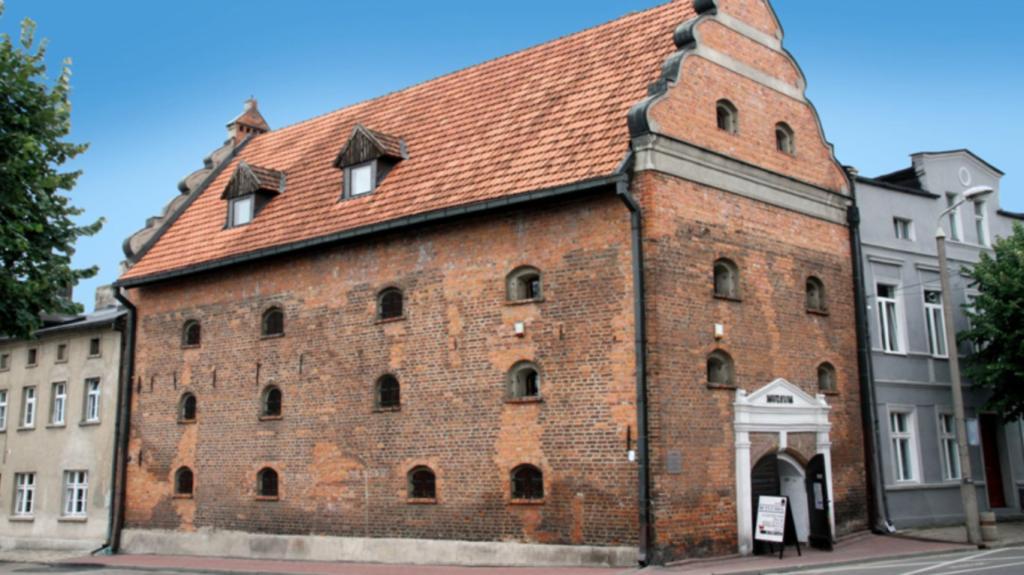
The permanent exhibition “The daily life of Mesolithic hunters from Mszana from 10000 years ago” in the Renaissance granary is one of the strongest archaeological highlights in Poland. Awarded in a nationwide competition, it is still sometimes underrated by individual tourists who associate Brodnica mainly with the castle.
Exhibit 1: Flint microliths – “tools like from a survival kit”
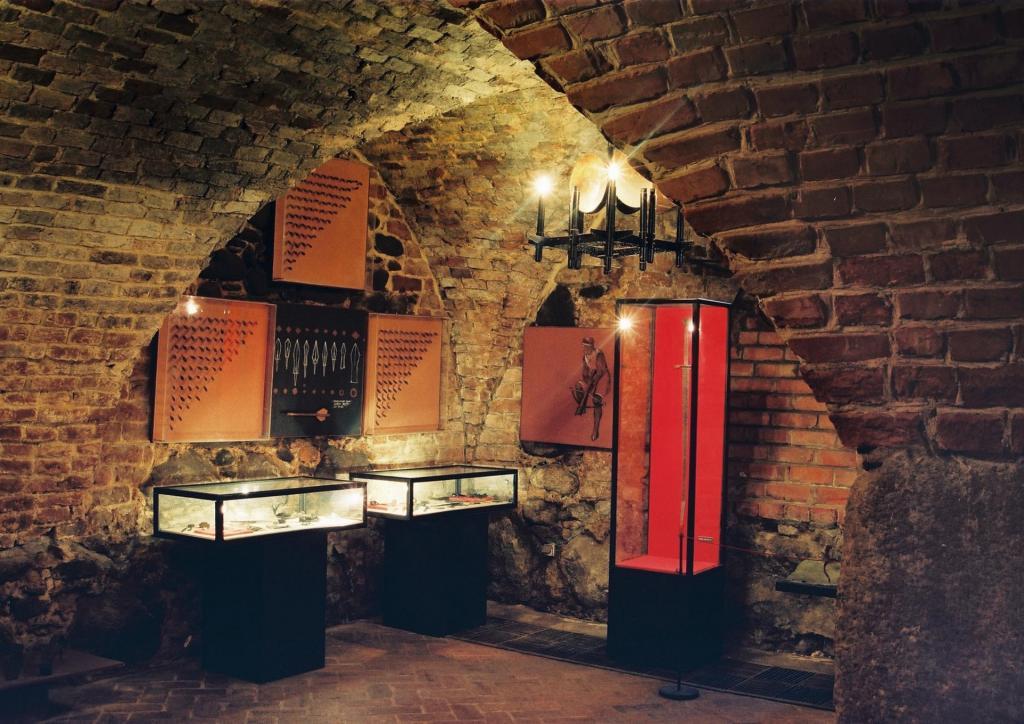
In the cases you will see small flint microliths – tiny blades, triangles and segments that Mesolithic hunters set into wooden or bone handles. From them arrowheads, harpoons, and knives were made.
Why are they so important?
- they show high specialization and precision of workmanship from 10 000 years ago,
- they reveal a mobile way of life – light, replaceable elements were easy to take on the move,
- they allow archaeologists to reconstruct hunting techniques and raw material processing.
It's worth pausing at the reconstruction boards – you'll see how an effective weapon was made from a few “stones”. This is one of the most interesting exhibits of the Museum in Brodnica if you are interested in the practical side of life in the Stone Age.
Exhibit 2: Bone harpoon from Mszana – proof of hunters' mastery
Among the finds from Mszana pay attention to the bone harpoon (or its fragment, depending on the current display). It is a tool for fishing and hunting aquatic game.
What to look at more closely:
- serrated edge – provided better retention of the catch,
- smoothness and symmetry – the result of long, painstaking work,
- wear marks that show this was not a “prop” but a real working tool.
This single object excellently illustrates how dependent Mesolithic hunters were on water and how well they “read” it. For teachers it is an ideal starting point for a discussion about human adaptation to the environment.
Exhibit 3: Full-scale reconstruction of a campsite – stepping into the Stone Age
In the Granary you will also find a full-scale reconstruction of a Mesolithic campsite. This is not a classic “exhibit in a case”, but a space you can almost enter.
Pay attention to:
- the layout of the hearth and sleeping places,
- the placement of tools and refuse (archaeologists “read” daily life from these),
- the use of natural raw materials – wood, bone, skins.
It's a great spot for families with children and school groups – here it's easy to combine the archaeological exhibition with the offer of the Centre for Ecological Education ("Nature from theory to practice"), which shows how humans have lived in symbiosis with the nature of the Brodnica Lakeland for thousands of years.
3. Exhibits 4–5: sculptures and details from the castle chapel
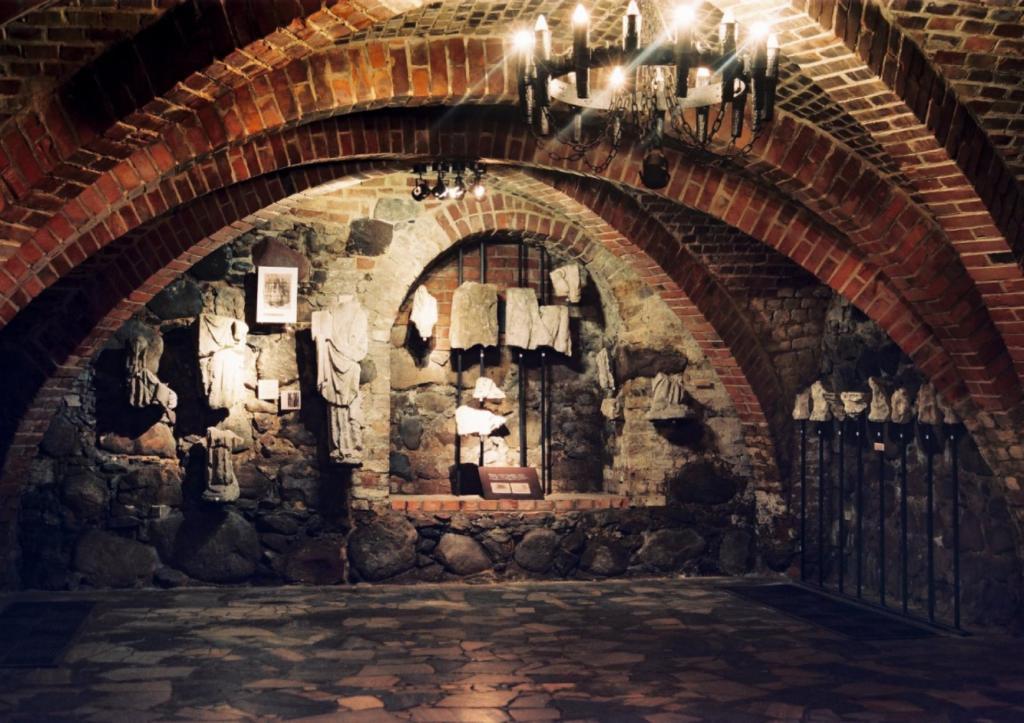
The cellars of the Teutonic castle hide the exhibition “Sculptures and architectural details from the castle chapel”. It's a place easily overlooked when focusing on the walls themselves and the history of sieges. Yet here you can see what the spiritual and artistic heart of the castle looked like.
Exhibit 4: Stone tracery and window details – Gothic in fragments
In one of the rooms you will find fragments of stone tracery and window details from the chapel. These are decorative elements that once filled the pointed-arch windows.
Why it's worth looking at them:
- they show the high level of craftsmanship in the 14th century,
- they allow you to imagine how light entered the chapel,
- they are an excellent example of Gothic geometry – arches, trefoils, quatrefoils.
For those interested in architecture this is one of the key castle Brodnica 2026 exhibits – we rarely have the opportunity to see such elements up close, without scaffolding and heights.
Exhibit 5: Carved sacred details – faces and ornaments from centuries ago
Next to the architectural details you will see carved fragments of the chapel's decoration: parts of figures, heads, hands, ornamental elements.
What to pay attention to:
- facial expressions – even damaged sculptures retain expression,
- traces of polychromy (if visible) – evidence that medieval interiors were colorful,
- stylistic differences – allow distinguishing the hands of different workshops.
This is excellent material for a conversation about religious iconography, but also about how wars, fires and reconstructions change the appearance of monuments. For young people it is a tangible example that a castle is not only walls but also a world of symbols and art.
4. Exhibits 6–7: works from Galeria Brama and contemporary accents
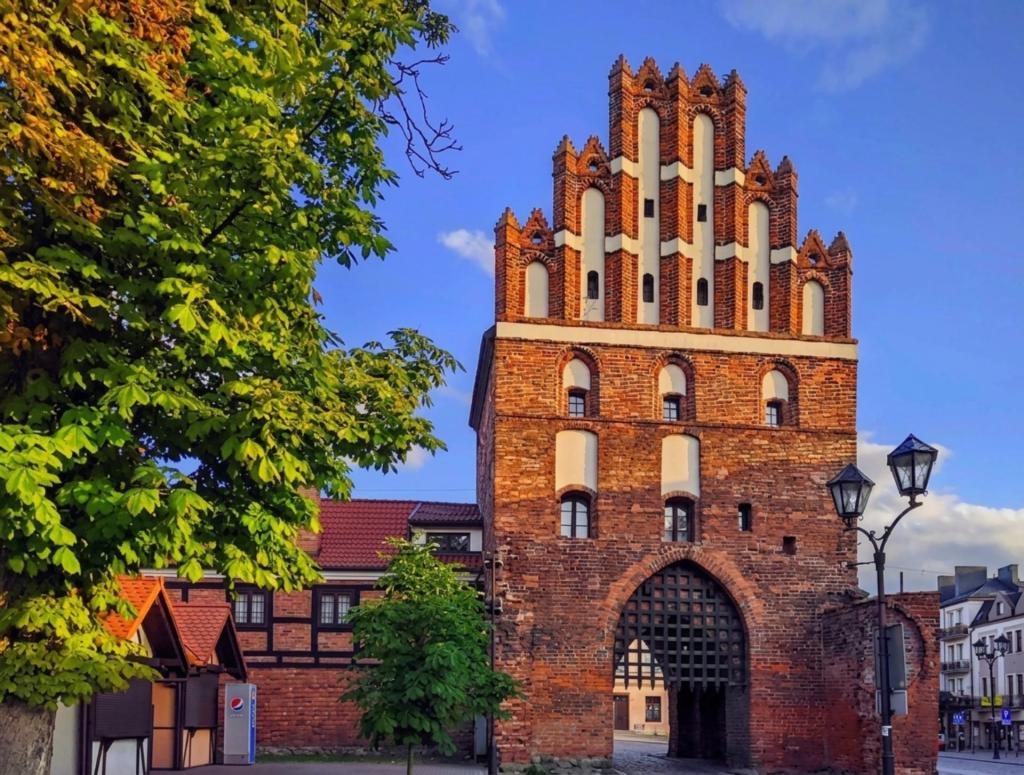
Brama Chełmińska, called the Stone Gate, is not only a defensive architectural monument but also Galeria Brama – a space for contemporary art. In 2026 the exhibition program is exceptionally rich, and among the works you can pick several that nicely “clasp” the city's history together.
Exhibit 6: Works by Elżbieta Dzikowska from the exhibition “Different Faces of Beauty”
In 2026 the Museum in Brodnica presents the exhibition “Different Faces of Beauty” – works by Elżbieta Dzikowska. It's an unexpected but very important contemporary accent.
Why include it in your route:
- it shows how a contemporary artist views the world, often from the perspective of a traveler and documentarian,
- it allows you to juxtapose old concepts of beauty (from the castle chapel) with today's ones,
- it's a great starting point to discuss how the role of the image changes – from sacred to documentary.
If you're interested in the most interesting exhibits of the Museum in Brodnica in the framing “from prehistory to today”, Dzikowska's works are an important contemporary link in that story.
Exhibit 7: Contemporary installations from the exhibition “Beyond the third dimension”
The exhibition “Beyond the Third Dimension – three individuals, three views, one shared space of art” is a proposal for those who like art that asks questions.
Look especially for:
- spatial installations that dialogue with the Gothic architecture of Brama Chełmińska,
- works using light and shadow – an interesting counterpoint to the medieval details from the castle,
- pieces that directly reference historical motifs or the local landscape.
These contemporary exhibits show that the Museum in Brodnica is not just a “warehouse of the past”, but a living cultural institution, cooperating with artists and creative communities.
5. How to plan seeing these exhibits (route and tickets)
To see all the described objects in one day, it's best to plan the route to connect the museum's three locations.
Suggested sightseeing route
- Spichlerz / Centrum Edukacji Ekologicznej – ul. Św. Jakuba 1
- Start with the exhibition of Mesolithic hunters from Mszana (exhibits 1–3).
- It's a good start because it introduces the oldest history of the region.
- Zamek pokrzyżacki – ul. Zamkowa 1
- From the Granary you can walk there in a few minutes.
- In the castle cellars you'll find the exhibition “Sculptures and architectural details from the castle chapel” (exhibits 4–5).
- Galeria Brama (Brama Chełmińska) – ul. Mały Rynek 4
- From the castle you'll walk through the town centre.
- Here look for contemporary accents: the exhibitions of Elżbieta Dzikowska and “Beyond the Third Dimension” (exhibits 6–7) and other current displays.
Tickets and passes – what pays off?
If you want to see all three sites in one day, the most convenient is to buy a pass:
- Karnet normalny: 20 zł – entry to all objects of the Museum in Brodnica (valid on the day of purchase),
- Karnet ulgowy: 10 zł – for pupils and students with an ID.
If you plan to enter only one place:
- Bilet normalny: 8 zł (for a selected object),
- Bilet ulgowy: 5 zł.
You can also buy tickets online:
- Zamek: https://hello-poland.pl/atrakcje/muzeum-w-brodnicy-zamek-krzyzacki-342
- Galeria Brama: https://hello-poland.pl/atrakcje/muzeum-w-brodnicy-brama-chelminska-134
- Spichlerz: https://hello-poland.pl/atrakcje/muzeum-w-brodnicy-spichlerz-341
- Attractions search in Brodnica: https://hello-poland.pl/szukaj?voivodeship=kujawsko-pomorskie&city=Brodnica
For organized groups it's worth considering:
- Guide: 30 zł/h – will help extract the maximum content from these exhibits,
- Museum lessons – price agreed individually (especially recommended for archaeological and natural topics).
If you're looking for a more active form of sightseeing, you can combine a museum visit with the city game “In the footsteps of Brodnica monuments” (20 zł/os.), which starts and finishes on the castle grounds. It's a great supplement for schools and groups.
6. Why these objects have local and educational value?
The exhibits described above create a coherent story about Brodnica and the region:
- Mszana and Mesolithic hunters show that human history on these lands goes back thousands of years. It's excellent material for lessons about the beginnings of settlement and human–environment relations.
- Sculptures and details from the castle chapel remind that Brodnica was an important point on the map of the Teutonic state and later the Polish–Lithuanian Commonwealth. They teach reading architecture and understanding sacred symbolism.
- Contemporary exhibitions in Galeria Brama show that the town lives culture today as well – from local initiatives to exhibitions by well-known artists. It's an opportunity to discuss continuity of tradition and the role of art in the contemporary world.
For the region's residents this is an important element of local identity – the possibility to see “their” history presented professionally but accessibly. For teachers and educators – ready-made lesson scenarios for history, civics, art or regional education.
The Museum in Brodnica is not only the castle and Gothic walls. It's also microliths from Mszana, fragments of medieval tracery and contemporary installations in Brama Chełmińska. When planning a visit, it's worth going beyond the “standard” route and finding these less obvious but extremely important exhibits yourself.
If you want to discover them in person, plan your visit, buy a ticket online and reserve at least a few hours for a relaxed visit to all three sites. Current information about exhibitions can be found on the Museum in Brodnica website: https://www.brodnica.pl/muzeumwbrodnicy/ – the rest will be told to you by history itself, hidden in walls, display cases and paintings.