The city game “Śladami brodnickich zabytków” is one of the most interesting ways to explore Brodnica with students and organized groups. It combines history, outdoor activity and teamwork.
The guide below is a practical instruction for organizing a city game in Brodnica for 2026 – step by step, with concrete examples from the offer of the Museum in Brodnica.
1. Czym jest gra miejska w Brodnicy?
The city game “Śladami brodnickich zabytków” is an offer prepared by the Museum in Brodnica for schools and organized groups. Participants move around the town, solve puzzles, complete tasks and document their route with photos.
Main assumptions:
- Theme: the history of Brodnica, its monuments and figures associated with them.
- Format: competition of small teams (3–4 people) within one group (10–30 people).
- Duration: approx. 90 minutes of active play.
- Location: Brodnica city centre, with the start and finish on the grounds of the Teutonic Knights' castle (ul. Zamkowa 1).
If you are looking for the phrase “gra miejska Brodnica instrukcja”, you will find practical tips here: how to prepare a class, how to choose tasks and how to combine the game with museum lessons and visits to sites.
2. Educational and integration goals — how to adapt tasks to age
The city game in Brodnica is not just fun. It is an educational tool that can be precisely adapted to the age and needs of the group.
Main goals of the game
The Museum in Brodnica assumes several key objectives:
- Learning the history of Brodnica and its monuments – in the field, at real sites.
- Discovering figures connected with the city’s history – e.g. the Działyński family, Anna Wazówna.
- Developing cooperation and logical thinking – tasks require role division and joint planning.
- Participant integration – especially important for new classes and mixed-class groups.
- Active time outdoors – moving around the town instead of sitting at desks.
Adapting tasks to age
The game offer is prepared for:
- students of grades IV–VIII of primary school,
- students of secondary schools,
- adult groups.
When planning the outing, it is worth specifying the difficulty level of the tasks with the museum. Example differences:
For grades IV–VI:
- shorter, simpler riddles (e.g. “Count how many steps lead to the entrance to the Chełmińska Gate”).
- observational tasks (“Find an element with a cross on the castle wall and draw it on the task sheet”).
- more physical and integration tasks (e.g. arranging a “living coat of arms” of Brodnica in a photo).
For grades VII–VIII and secondary schools:
- questions requiring connecting facts (“In which century was the Chełmińska Gate built and what function did it serve in the 19th century?”).
- tasks using the Internet (searching for information about the Działyński family or Anna Wazówna).
- elements of map work and orientation in the field.
For adults:
- more elaborate historical and architectural puzzles.
- tasks requiring interpretation (e.g. comparing the former functions of a site with its contemporary use).
If you are organizing a city game for schools, it is worth providing the museum, before booking, with:
- the age of participants,
- the class profile (e.g. humanities class, biology class),
- whether the group already knows Brodnica or will be here for the first time.
3. Preparation: materials, equipment, roles in the team
Good organization of the game begins at school or at the institution from which the group arrives.
What the Museum in Brodnica provides?
At the start each team receives a starter pack:
- task sheet – with descriptions of checkpoints and instructions,
- map with marked points – helps to move around the town.
The difficulty level and content of the tasks are adapted to the age of the participants.
What each team should have?
According to the rules of the game “Śladami brodnickich zabytków”:
- at least one pen or pencil to fill in the task sheet,
- a phone or a camera with photo capability – to document visited points.
In practice it is worth ensuring that:
- the phone has a charged battery,
- there is a possibility to share the photos after the game (e.g. by e‑mail, cloud drive, USB stick for the teacher).
Division of roles in the team
To ensure the game runs smoothly, encourage students to divide roles in 3–4‑person teams:
- Navigator – responsible for the map and plotting the route.
- Secretary – fills in the task sheet, writes down answers.
- Photographer – takes care of photographic documentation.
- Time coordinator (in 4‑person teams) – monitors the time limit and the order of checkpoints.
Such a division teaches responsibility and cooperation, and at the same time makes it easier for the teacher to assess individual engagement.
4. Route course: start and finish at the Castle, sample checkpoints
Start and finish – the Castle in Brodnica
The game starts and ends on the grounds of the Teutonic Knights' castle (ul. Zamkowa 1). It is the town’s natural historical centre and a great place for a short introduction:
- reminding of safety rules,
- handing out starter packs,
- discussing the duration of the game (approx. 90 minutes),
- setting the meeting time at the finish.
Sample checkpoints
Although the specific tasks are prepared by the Museum in Brodnica, as an organizer you can expect points related to the most important sites:
- Teutonic Knights' castle
- possible task: finding an architectural detail related to the former castle chapel,
- question about figures connected with the castle (e.g. Anna Wazówna, the Działyński family).
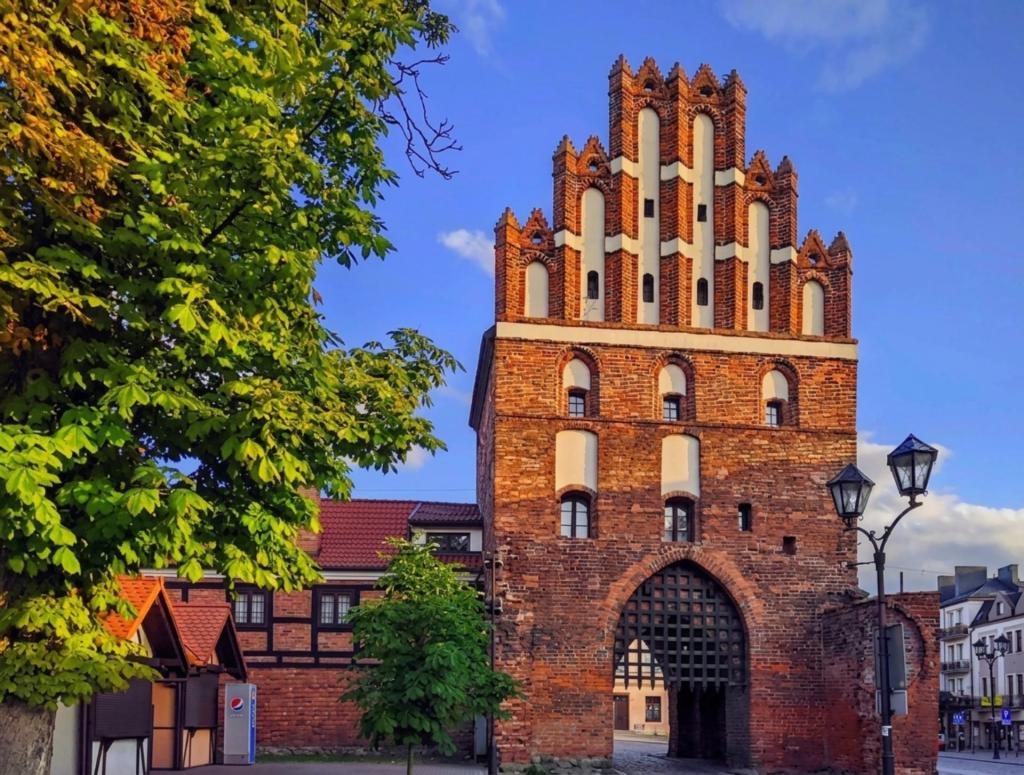
- Chełmińska Gate (Stone Gate) – ul. Mały Rynek 4
- observational task: counting the storeys, describing the stepped gables,
- question about the building’s former functions (e.g. prison in the 19th century).
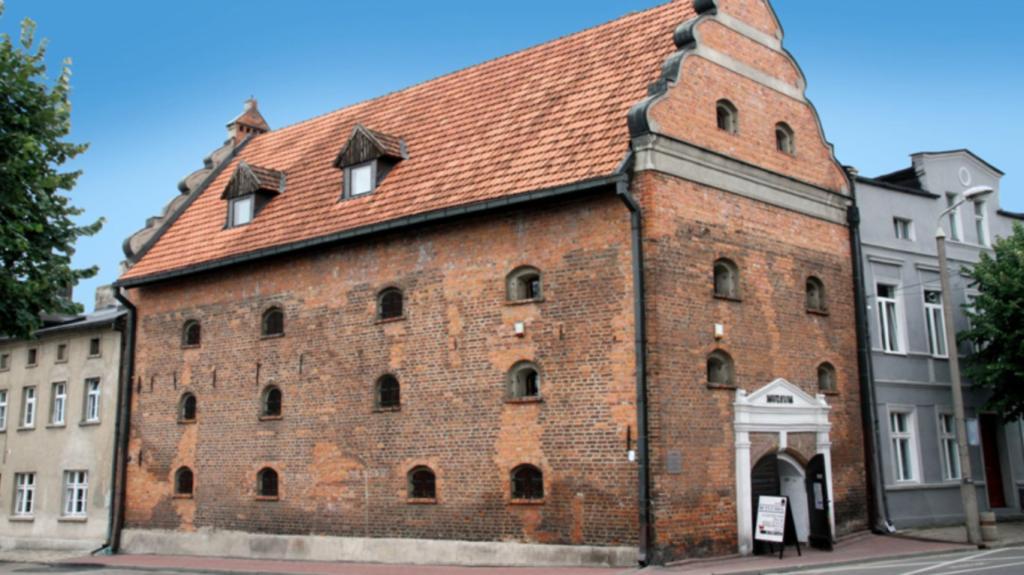
- Granary / Centre for Ecological Education – ul. Św. Jakuba 1
- task: recognizing elements of a Renaissance gable,
- question about the exhibition “Everyday life of Mesolithic hunters from Mszan about 10,000 years ago”.
- Selected places in the town centre (e.g. around the market square, city parks, fragments of the walls)
- tasks combining history with nature (e.g. observing the Drwęca River as an ichthyological reserve),
- short integration tasks (e.g. arranging a slogan from letters hidden in the urban space).
Movement organization and safety
For a group of 10–30 people it is worth:
- dividing participants into 3–8 teams of 3–4 people,
- assigning supervisors (teachers, tutors) to oversee the route,
- reminding the rules of moving around the town (sidewalks, pedestrian crossings, not straying from the group).
The Museum in Brodnica does not provide supervision during the game – supervisors and participants are responsible for safety. Minors participate only under the supervision of a teacher or another adult.
5. Documentation and evaluation: photos, scoring, prizes
Photographic documentation
One of the key elements of the game is photographic documentation:
- each team should take a group photo at each visited point,
- photos are proof that the team actually reached a given site.
It is worth agreeing with students already at the planning stage:
- who will be responsible for sending the photos to the teacher,
- whether the photos will be used, for example, in the school bulletin, on the school website or in the trip report.
Scoring
Typically evaluated are:
- correctness of answers on the task sheet,
- completeness of the route (number of visited points),
- quality of documentation (whether the photo shows the team and the object),
- completion time – if the organizer introduces a limit or rewards faster teams.
As a teacher you can additionally award points for:
- creativity (e.g. the most interesting photo from the route),
- cooperation (e.g. mutual evaluation within the team),
- presentation of results after returning (short oral report or poster).
Prizes and summary
Prizes do not have to be expensive – what matters is satisfaction and recognition of effort. Examples:
- certificates for the winning teams,
- small gifts (bookmarks, pens, booklets about Brodnica),
- extra credit or grades in history / civics / geography.
At the end of the game it is worth organizing a short summary on the castle grounds:
- announcement of results,
- discussion of the most interesting tasks,
- a group photo of the whole group in front of the castle ruins.
6. Connection with museum lessons and site visits
One of the biggest advantages of the game “Śladami brodnickich zabytków” is the possibility of combining it with the full educational program of the Museum in Brodnica.
Visiting museum sites
The Museum in Brodnica operates in three historic buildings:
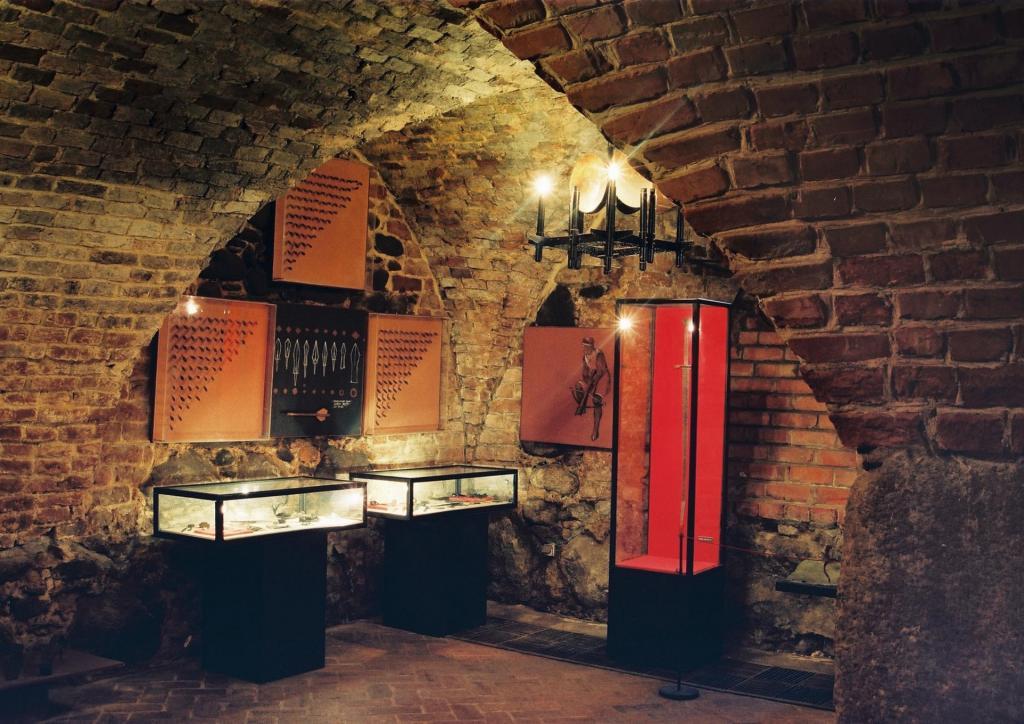
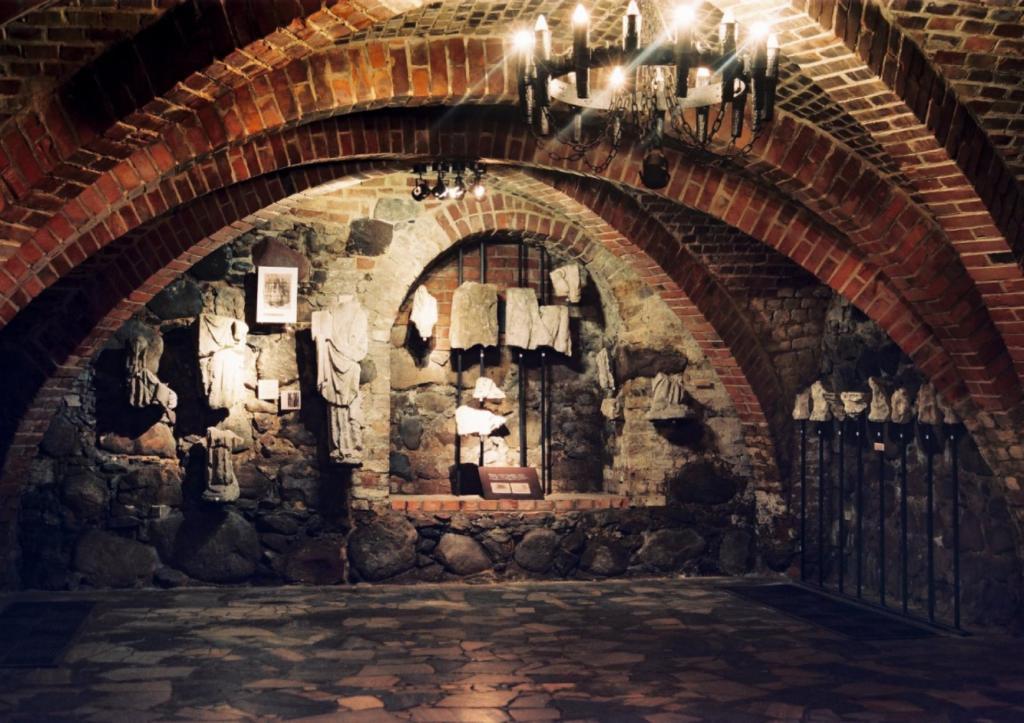
- Castle – castle cellars with the exhibitions “The Brodnica region in the Middle Ages” and “Sculptures and architectural details from the castle chapel”.
- Chełmińska Gate / Brama Gallery – temporary exhibitions and an art gallery.
- Granary / Centre for Ecological Education – exhibition about Mesolithic hunters and natural displays.
Price list (as of 2026):
- Regular ticket: 8 zł (for one site),
- Reduced ticket: 5 zł (for one site),
- Regular pass: 20 zł (all sites, valid on the day of purchase),
- Reduced pass: 10 zł (all sites, valid on the day of purchase),
- Guide: 30 zł/h.
Tickets can also be purchased online:
- Castle: https://hello-poland.pl/atrakcje/muzeum-w-brodnicy-zamek-krzyzacki-342
- Chełmińska Gate: https://hello-poland.pl/atrakcje/muzeum-w-brodnicy-brama-chelminska-134
- Granary: https://hello-poland.pl/atrakcje/muzeum-w-brodnicy-spichlerz-341
Museum lessons and nature activities
You can add to the city game:
- museum lessons (fee arranged individually) – e.g. about the Middle Ages, archaeology, regional history,
- the program “Nature from theory to practice” at the Centre for Ecological Education:
- theoretical part – touring the exhibition with a biologist,
- field part – a walk through city parks and along the Drwęca River,
- ending with a bonfire by the castle ruins,
- cost: 150 zł per group.
Such a combination makes organizing a city game for schools a full-day program:
- Morning – a museum lesson or nature activities.
- Afternoon – the city game “Śladami brodnickich zabytków”.
- Finally – a summary, bonfire or free time in the town.
Reservation and contact
To book the city game:
- register the group at least two weeks before the planned date,
- contact in person at the castle or by phone: 56 498 47 87.
Contact details of the Museum in Brodnica:
- Main address: ul. Św. Jakuba 1, 87-300 Brodnica
- Tel./Fax (Granary / administration): 56 495 05 70
- E‑mail: sekretariat@muzeum.brodnica.pl
- Website: https://www.brodnica.pl/muzeumwbrodnicy/
In case of cancellation the museum asks to inform immediately.
Summary – plan your city game in Brodnica for 2026
The city game “Śladami brodnickich zabytków” is a ready-made scenario for an active lesson in history, nature and teamwork in one. Thanks to clear rules, starter packs and the support of the Museum in Brodnica, organization is simple and the educational effects are very concrete.
If you are looking for a proven solution under the phrase “gra miejska Brodnica instrukcja” – take advantage of the museum’s offer, combine the game with visits to the castle, the Chełmińska Gate and the Granary and with museum lessons.
Contact the Museum in Brodnica, book a date and let your group discover Brodnica on the move – step by step, task by task.