Planning a class trip to a museum often feels like a logistical challenge. In 2026, however, the Museum in Brodnica offers such a broad and flexible program that with proper preparation you can turn an ordinary excursion into a full-fledged educational project – from history and archaeology, through art, to ecology.
Below you will find a practical guide on how to plan, step by step, a school trip to the Museum in Brodnica for grades IV–VIII and secondary schools, including the city game “In the Footsteps of Brodnica’s Monuments”, logistics, budget and teaching materials.
1. Educational objective and target group: grades IV–VIII and secondary schools
Match the trip to the curriculum
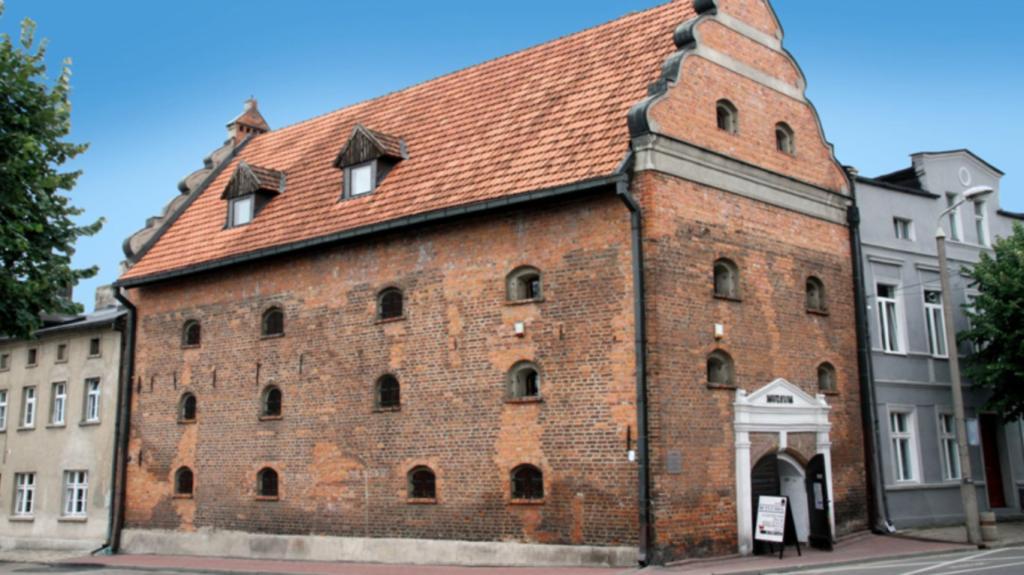
The Museum in Brodnica consists of three historic sites in the town center (the Castle, the Granary, the Chełmno Gate) and a rich educational offer. The trip can be easily linked to the curriculum:
- History (primary and secondary schools) – the Middle Ages, the Teutonic Order state, the Polish–Lithuanian Commonwealth, everyday life in the past, archaeology as a source of knowledge about history.
- Polish language – working with cultural texts (exhibitions, comics such as “Kajko and Kokosz teach archaeology”), creating descriptions, trip reports, interviews with museum staff.
- Civics / Social Studies – the region’s cultural heritage, the role of cultural institutions, local government (co-organization of events by the Mayor of Brodnica).
- Art / art history – analysis of artworks in temporary exhibitions (e.g. “Different Faces of Beauty”, “Beyond the Third Dimension”, exhibitions of students from the Secondary School of Fine Arts in Rypin).
- Biology / geography – classes at the Center for Ecological Education, nature of the Brodnica Lakeland, the Drwęca River as an ichthyological reserve.
How to tailor the program to students’ ages?
Grades IV–VI:
- shorter visiting blocks (30–45 minutes per exhibition),
- emphasis on interactive and narrative elements (guide stories, the comic “Kajko and Kokosz teach archaeology”),
- a simpler version of the city game – more observational tasks, less text.
Grades VII–VIII and secondary schools:
- full program: Castle + Granary + Gallery,
- the city game “In the Footsteps of Brodnica’s Monuments” with emphasis on independent information gathering,
- possibility to include project elements (e.g. mini field research, photo reports, podcasts).
2. Sample program: touring the Castle, the Granary and the Gallery
Below is a sample one-day school trip to Brodnica (approx. 5–6 hours on site, excluding travel):
Teutonic Castle – history and archaeology (approx. 1.5 hours)
Address: ul. Zamkowa 1, Brodnica\ Tickets online: Castle – hello-poland.pl
Proposal:
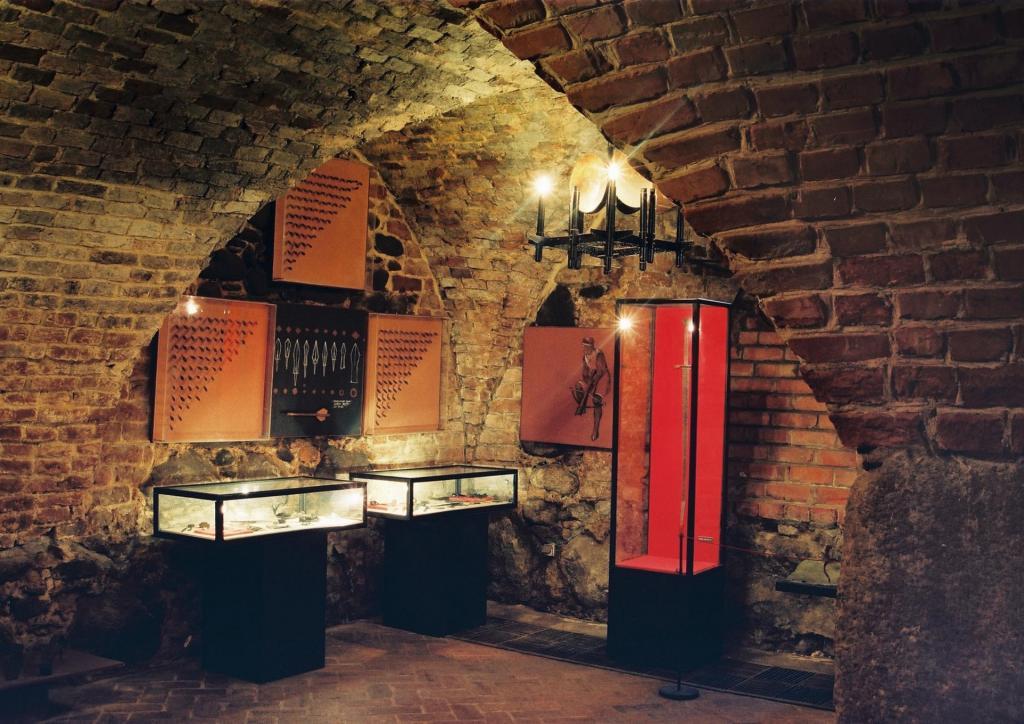
- 30 min – introduction to the history of the castle (construction from around 1285, role of the Teutonic Order, later seat of royal castellans, including the Działyński family and Princess Anna Vasa).
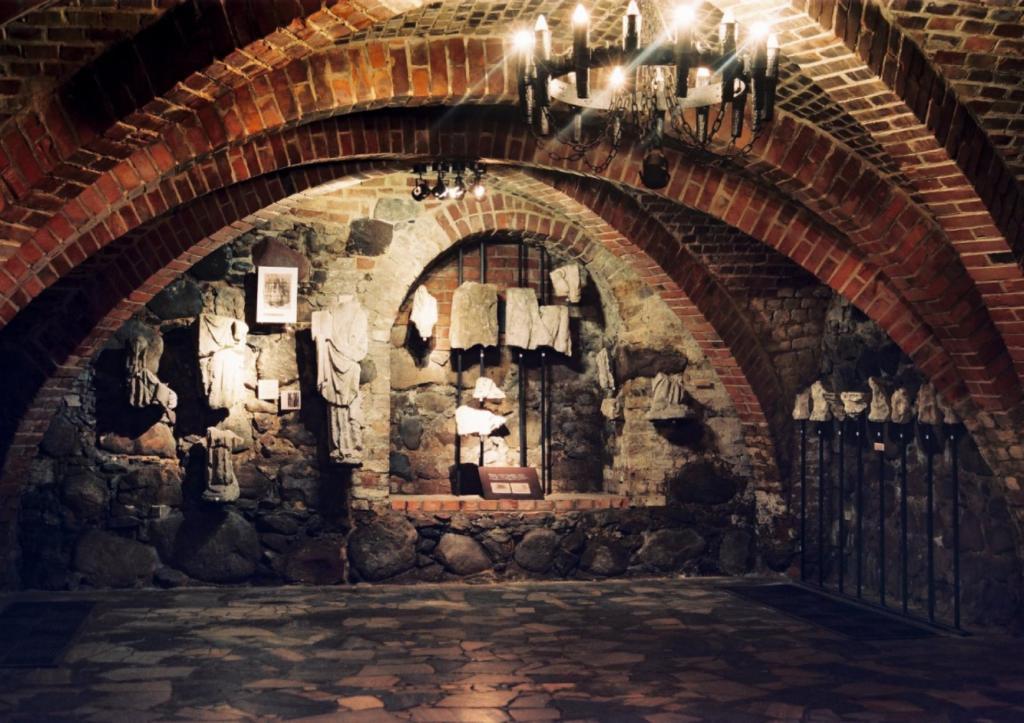
- 45–60 min – guided tour of the castle cellars:
- the exhibition “The Brodnica Region in the Middle Ages”,
- “Sculptures and architectural details from the castle chapel”.
Teaching tip: ask students to note 3–5 facts about everyday life in the Middle Ages that they will later use in history class.
Granary / Center for Ecological Education (approx. 1.5–2 hours)
Address: ul. Św. Jakuba 1\ Tickets online: Granary – hello-poland.pl
The granary houses:
- the permanent exhibition “Everyday life of Mesolithic hunters from Mszano from 10,000 years ago”,
- the Center for Ecological Education with three nature displays.
You can choose:
- grades IV–VI – greater emphasis on the reconstruction of the Mesolithic camp and basic ecological concepts,
- grades VII–VIII and secondary schools – the full program “Nature from theory to practice” (approx. 2.5–3 hours, cost 150 zł per group of 25–30 people), including:
- 1 hour – theoretical part at the Center for Ecological Education (led by biologist Marek Bartkowski),
- 1 hour – field activities in city parks and along the Drwęca,
- 0.5–1 hour – bonfire near the castle ruins.
Contact for nature activities:\ Marek Bartkowski, tel. 508 376 122.
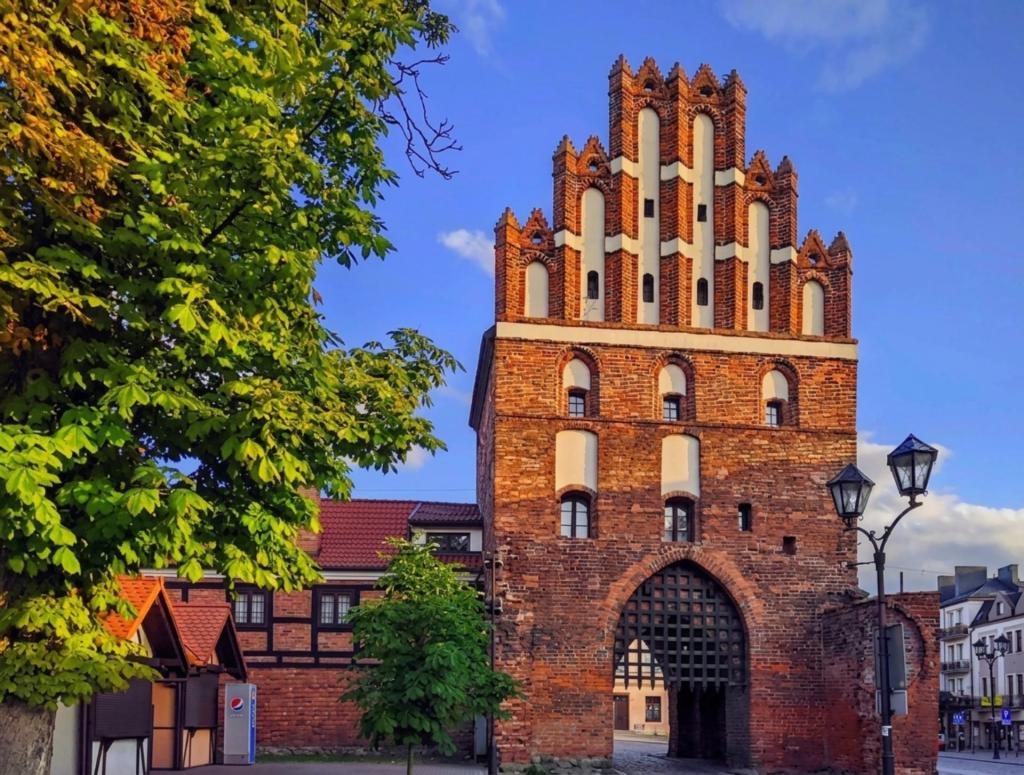
Gallery Gate (Chełmno Gate) – art and architecture (approx. 1 hour)
Address: ul. Mały Rynek 4\ Tickets online: Chełmno Gate – hello-poland.pl
Temporary exhibitions take place in the Chełmno Gate and the adjacent townhouse, including:
- “Different Faces of Beauty” – works by Elżbieta Dzikowska,
- “Beyond the Third Dimension” – group exhibition of ZPAMiG,
- exhibitions by students of the Secondary School of Fine Arts in Rypin.
Suggested task: students choose one artwork that moved them the most and prepare a short note or sketch – material for a later art or Polish language lesson.
3. The city game “In the Footsteps of Brodnica’s Monuments” — how to use it in lessons
The city game “In the Footsteps of Brodnica’s Monuments” is an ideal complement to the visit – it combines movement, cooperation and independent exploration of the town.
Basic information about the game
- For whom: grades IV–VIII and secondary schools (task level adapted to age).
- Group size: 10–30 people.
- Teams: 3–4 people.
- Duration: approx. 90 minutes.
- Start and finish: the grounds of the Brodnica castle.
- Cost: 20 zł per person.
Each team receives:
- a task card,
- a map with control points.
Tasks involve:
- finding specified locations in the town,
- solving riddles,
- performing tasks (e.g. reading an inscription, finding an architectural detail),
- documenting points with a team photo.
How to integrate the game into the teaching process?
Before the trip (preparatory lesson):
- a short presentation about the history of Brodnica and its monuments (students can find information online on their own),
- division into teams and discussion of cooperation rules,
- reminder of safety rules in urban spaces.
During the game:
- encourage students to take additional photos and short notes – these will be useful for later project tasks,
- allow Internet use (this is part of the game), but ask them to record their sources (e.g. website addresses) – a good introduction to a discussion about information reliability.
After the trip:
- in history – students create a mind map “Brodnica – a town of monuments” based on the places visited,
- in Polish – they write a report from the city game or an interview with a participant,
- in IT – they prepare a multimedia presentation or a simple webpage/infographic about a chosen monument.
In this way the city game “In the Footsteps of Brodnica’s Monuments” becomes not only an attraction but an integral part of the lesson cycle.
4. Logistics and safety: reservations, group size, supervisors
Booking visits and the game
To ensure that museum lessons Brodnica reservation 2026 run smoothly, it is worth:
- Contacting the museum in advance (min. 2–3 weeks):
- Museum (Granary) – ul. Św. Jakuba 1, tel./fax: 56 495 05 70, e‑mail: sekretariat@muzeum.brodnica.pl,
- Castle – tel. 56 498 47 87 (also regarding the city game),
- Gallery Gate – tel. 56 649 82 52.
Registering participation in the city game at least 2 weeks before the date (in person at the castle or by phone: 56 498 47 87).
In case of cancellation – inform the museum immediately to free up the date.
Group size and supervisors
- Recommended group for the city game: 10–30 people.
- For activities at the Center for Ecological Education: 25–30 people.
- Standard practice assumes a minimum of 1 supervisor per 15 students, but for younger classes (IV–VI) it is worth increasing the number of supervisors, especially during the city game in public spaces.
Important:
- minors participate in the game only under the supervision of a teacher or another adult,
- the Museum in Brodnica does not provide supervision during the game – supervisors are responsible for safety.
Practical safety tips
- prepare a list of participants with parents’ contact numbers,
- divide students into teams at school and appoint a leader in each group,
- set the time and meeting place after the game (e.g. the castle courtyard),
- remind about rules for moving around the town (pedestrian crossings, no wandering away from the group, polite behavior toward residents).
5. Budget and tickets: passes, guide, additional costs
Museum tickets (as of 2026)
- Regular ticket: 8 zł – for one site (Castle / Granary / Gate).
- Reduced ticket: 5 zł – for pupils and students (one site).
- Regular pass: 20 zł – all museum sites on the day of purchase.
- Reduced pass: 10 zł – all museum sites on the day of purchase (recommended for classes).
Guide: 30 zł/h (it is worth booking at least 1–2 hours for the Castle and Granary).\ Museum lessons: fee set individually – best to discuss by phone or e‑mail.
City game and nature activities – costs
- City game “In the Footsteps of Brodnica’s Monuments” – 20 zł per person.
- “Nature from theory to practice” (CEE) – 150 zł per group of 25–30 people.
Sample budget per student (2026)
Assuming the class uses the full museum offer:
- reduced pass (Castle + Granary + Gate): 10 zł,
- city game: 20 zł,
- participation in “Nature from theory to practice” (for 30 people): 150 zł / 30 ≈ 5 zł,
- guide (2 hours = 60 zł, for 30 people): 60 zł / 30 = 2 zł.
Total approximately: about 37 zł per student (excluding transport and meals).
If the budget is limited, you can:
- skip one site (e.g. only Castle + city game),
- shorten guide time,
- choose only the city game + one site.
Tickets can also be purchased online:
- Castle: https://hello-poland.pl/atrakcje/muzeum-w-brodnicy-zamek-krzyzacki-342
- Granary: https://hello-poland.pl/atrakcje/muzeum-w-brodnicy-spichlerz-341
- Chełmno Gate: https://hello-poland.pl/atrakcje/muzeum-w-brodnicy-brama-chelminska-134
6. Pre- and post-trip materials: tasks and lesson scenarios
To ensure that a school trip to Brodnica yields lasting educational effects, it is worth planning at least two accompanying lessons – before and after the trip.
Before the trip – preparing the students
History / Social Studies (45 min):
- a short presentation about the history of the Museum in Brodnica (established in 1973, current name since 1999, three historic sites),
- discussion of the museum’s role as a scientific-educational institution,
- division of students into “expert” groups: history, archaeology, art, nature – each group prepares 3 questions they will try to answer during the visit.
Polish / IT (45 min):
- announcement of the post-trip task (e.g. report, presentation, podcast),
- discussion of rules for taking notes and photos as source material.
During the trip – simple worksheets
Prepare short worksheets (1–2 pages), e.g.:
- for the Castle: “Find 3 objects in the exhibition related to everyday life in the Middle Ages and describe their function”,
- for the Granary: “List 3 differences between the life of Mesolithic hunters and our contemporary life”,
- for the Gallery: “Note the title and author of the work that interested you most and explain why (3–4 sentences)”,
- for the city game: “Mark on the map 3 places you would like to show to a friend from another town and justify your choice”.
After the trip – consolidation and evaluation
History (45 min):
- group work on a poster “Brodnica – from the Middle Ages to today”,
- presentation of conclusions from the worksheets.
Polish (45–90 min):
- writing a report from the trip or a story “A day in the life of a resident of medieval Brodnica”,
- editing a joint post for the school website or the school magazine.
Art / Ethics:
- creating a mini photo exhibition from the trip (e.g. in the school corridor),
- art projects inspired by the exhibitions in the Gallery Gate.
This way a trip to the Museum in Brodnica becomes part of a broader educational project rather than a one-off attraction.
Summary – how to start planning a trip to the Museum in Brodnica 2026?
- Define educational objectives – history, art, nature, class integration.
- Choose program elements – Castle, Granary, Gallery, city game “In the Footsteps of Brodnica’s Monuments”, activities “Nature from theory to practice”.
- Check the budget – compare single tickets with passes, add the game, guide and possible special activities.
- Book a date – contact the museum (tel. 56 495 05 70, sekretariat@muzeum.brodnica.pl) and the castle regarding the game (tel. 56 498 47 87).
- Prepare students – introductory lessons, division into teams, discussion of safety rules.
- Plan post-trip activities – project work, presentations, school exhibitions.
If you are planning museum lessons Brodnica reservation 2026, it is worth taking the first step now: check current exhibitions and events on the Museum in Brodnica website and contact museum staff to tailor the program to your class’s needs.
A well-planned school trip to the Museum in Brodnica can become one of those trips that students will remember for years – a combination of history, nature, art and great fun in the town’s space.